Showing posts with label lynx. Show all posts
Wednesday, November 04, 2009
Todd's Adventures in Slime World - Some Screenshots
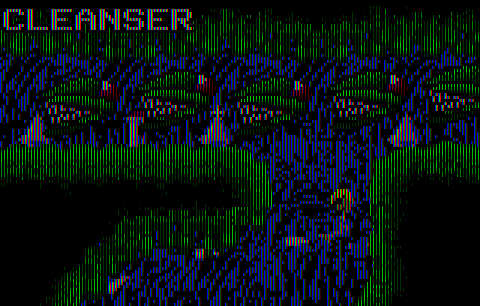
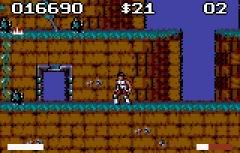
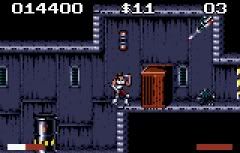
Here are some screenshots from another one of my all-time favorite videogames, Todd's Adventures in Slime World, designed by Epyx for the Atari Lynx. It's atmospheric, underground caverns were endlessly pulsing, gurgling, breathing. There was nothing else like it before or since, and it's a smashing great time.
The gameplay of Slime World essentially beat Super Metroid to the punch by several years, yet the focus is squarely on exploration and survival. The most legendary feature is multiplayer deathmatch for up to eight players. There were a lot of deathmatch games on Lynx, and all of which predated Doom. Too bad everyone else you knew had Gameboys. Multiplayer Lynx remains of the lost Holy Grails of video games.
I can't remember if I posted these screenshots years ago, but I've always been proud of them. They were snapped on the Handy emulator on my PC.
Sunday, May 10, 2009
Atari Lynx in Action
Saturday, May 02, 2009
Photos - Xenophobe


Now this is really fun. Xenophobe arrived on the Atari Lynx in 1990, and it's clearly the best action game on the color handheld. It's arguably the equal to the arcade original, thanks to a better control scheme, a wider cast of goofy characters, and some cooler weapons. Basically you just run around various space stations, zapping aliens and trying not to become lunch.
The best thing about Lynx Xenophobe are the four-player games. Yep, more 4P action! You can either work together to clear out the space stations, or someone can play one of the aliens themselves. Then you get to sneak up on your friends and eat them. Yeeeehhhhh....how is that not fun? A game where I can play a duck, that mad scientist from "Back to the Future, and a giant green alien? Why isn't this on a Nintendo DS or Playstation Portable right now?!
The poor Lynx was starved for action games. Heck, it was starved for any kind of game. What the heck were the Tramiels doing with their days? The original Atari freaks back in the '70s were far more productive with their time, and they were stoned off their asses.
Videogame Classics - Shanghai (1990)


Shanghai was Atari's excellent mahjong puzzler on the Lynx in early 1990. Activision had brought the game to computers in the late '80s, so this was already a well-known hit, and it was a great addition to the Lynx library.
Nintendo's Gameboy was selling like hotcakes on the back of Tetris, which is just about the greatest videogame ever made. And Atari desperately needed something similar to compete, but games were too few and far between. You would think puzzle games would be falling from the sky, but no dice. Fortunately, the few puzzlers on the Lynx are quite excellent.
Still, only four puzzle games on the Lynx? Chip's Challenge, Shanghai, Klax, Crystal Mines 2 - that's it. True, the software library was small, downright embarrassing, around 100 titles. But you would think Atari would have released more puzzle games, which had to have been easy to design and develop. The production costs surely were cheaper than the big-name arcade games.
Ah, well. It's impossible to discuss the Atari Lynx without everything becoming shrowded in tragedy. It's the rock star who died young, and died foolishly. If only there were better management, if only the record label wasn't so grossly incompetent. If only Tetris hadn't happened, right there and then. There's nothing you can do but shrug your shoulders and go on living.
Anyway, Shanghai is an excellent tile puzzle game for the Lynx. It might even be the best. Two players can compete against one another, racing to removie the most tiles, I would guess. You have an impressive collection of tile formations to choose from, and they're randomized each game, promising a fresh challenge every time.
If I remember correctly, there was a Shanghai for the Gameboy. The Lynx version just stomped it to pieces. It's quite an embarassing fight, really, and you could imagine Atari taking advantage of the Lynx' sheer power to stomp Nintendo's handheld every step of the way. But that would require competence, some basic understanding of videogames and why they were popular with kids.
The Tramiels never knew what the hell they were doing. All Jack Tramiel and his sons knew was backstabbing, cutthroat politics. But that way of doing business only works when you're on top. Nintendo was on top. Commodore was on top. Atari was at the bottom. They never accepted that simple fact and it cost them dearly.
And so, one of the better Atari Lynx titles becomes a game of what-ifs and what-could-have-beens. Oh, and I have I mentioned that Shanghai is a really, really good puzzle game?
What else am I supposed to say? You match tiles, they float away, you keep going until you can't match any more or clear the board. The music is catchy, without being too annoying, which is a rare thing with Lynx games. And everything is in full color and looks wonderful. God bless the person who thought to zoom out the tiles so I could actually see what I'm doing.
If you decide to score a Lynx from Ebay (not a bad idea, really), then remember to get Shanghai. You'll have a great time.
P.S. I just remembered that Lynx had a fifth puzzle game, a matching tile puzzler named Ishido. It was almost instantly forgettable, and wouldn't hold your attention for five minutes. We'll just not bother counting it.
Tuesday, April 28, 2009
Photos - Warbirds (1990)


Warbirds is one of the very best showpiece games for the Atari Lynx. As you can see, both Epyx and Atari were very aggressive with pushing the 3D graphics capabilities of the Lynx, and this resulted in a number of very groundbreaking games that never failed to turn heads and impress gamers.Multiplayer was another key element to many Lynx games. While the Gameboy included a link cable for head-to-head play, the Lynx could connect as many as 16 players at once. Most of these were four-player titles, except for Checkered Flag at six, and Slime World at 8.
In 1989 and 1990, this was another key innovation, completely unheard of. Online gaming was still in its infancy, and console games only allowed for head-to-head. Heck, I can't think of a single 4-player console game in the 1980s apart from Warlords on the Atari 2600. So you can see just how big a leap Epyx took with the Lynx.
Warbirds was really the first multiplayer deathmatch. There are no missions in the game, or training modes, or various locales. It's all about the combat, and it's clearly intended for four friends to go after each other. As a single-player games, this is one of the Lynx' very best titles; multiplayer sweeps you into another realm altogether.
The cruel irony is that the Lynx never sold enough for multiplayer to become an option for most gamers. I suppose we can always hop on Ebay and score enough Lynx handhelds and games, but, good heavens, that is a heavy investment. Sometimes I wonder why Infrogrames, which owns the Atari catalog, couldn't simply reissue these games on the PSP or DS. Better yet, just reissue the Lynx itself. They made a couple bucks off repackaged Atari 2600's. Why not the Lynx?
Photos - Electrocop (1989)


Some screenshots from Epyx' 1989 Lynx launch title, Electrocop. If I remember correctly, the game was originally titled Impossible Mission, which really makes more sense, since it plays very much like a 3D version of the action-adventure classic. No doubt Atari was responsible for the name change. They always had a way with bland, generic videogame titles, didn't they?
I've written about this game at least twice before in recent years, so it's no surprise this was a favorite game of mine. It was a fantastic thrill ride 20 years ago, an amazing display of 3D technicolor graphics and relentless tension. In 1989 and 1990, having an Atari Lynx was a thing of pride, a rare achievement. You wanted great games to impress all the other kids who had Gameboys. And they were surely impressed and amazed, every single one.
Greg Omi crafted a masterful three-dimensional landscape. There was nothing else remotely like it at the time, and I didn't anticipate that this was where games would later evolve. But I did imagine what 3D game worlds like this could be. Those dreams wouldn't be realized until Super Mario 64 and Tomb Raider....seven years later. And no handheld game could match Electrocop until the arrival of the Playstation Portable. Now that's visionary.
These screenshots were taken on the Handy emulator, which has a neat "lcd" mode that simulates the look of the Lynx screen. It's a rather cheap effect but it works nice, and captures the feel of these old handheld games. Without this filter, the graphics don't quite look the same. Enjoy!
Photos - California Games (1989)


Epyx's California Games became the pack-in game for the Atari Lynx when it launched in 1989.
Of the four events, only skateboarding is a miss. The other three events - BMX Bike, Surfing, Hacky Sack - continue to be far more addicting and fun than any reasonable adult should admit. I don't think I can write anything more about the game. It was a lot of fun on my Lynx 20 years ago, and it's a lot of fun running on the Handy emulator on my PC today.
Personally, I'd still rather play California Games on an actual Lynx. I've always wanted to see what multiplayer was like, and thanks to poor sales, hardly any Lynx owners ever got the chance to find out. Apparantly, you could knock the other surfers out of the water in Surfing. 4-Player surfing deathmatch?! How did we miss out on this?!
If you get yourself a Lynx from Ebay, be sure to get this game. You'll make all the other 30-somethings jealous.
Photos - Blue Lightning (1989)


Why was I snapping screenshots of Atari Lynx games this weekend? I think I was sorely tempted to post these onto the Ghibli Blog, and show them off. Every once in a while, I get the temptation to buy an Atari Lynx or two, and a series of games again.
2009 marks the 20th birthday of the Lynx. It was arguably Epyx's finest hour. Pity they were forced to sell out to Atari Corp. In the right hands, this handheld would have conquered the world. Nintendo's humble Gameboy couldn't even come close.
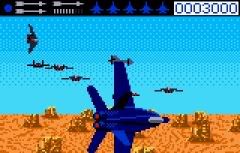
Blue Lightning is easily the best Afterburner clone that's ever been made. It was a fantastic show-off game for the Epyx/Atari handheld, boasting vivid color palette and amazing visual effects. It really was spectacular to see in its day, and there are still some moments, like the suicide canyon run, that have yet to be surpassed. Oh, good heavens, barreling through the canyon run with the afterburners on...wow.
Killer app? Heck, Blue Lightning remains a killer app in 2009. Think about that for a minute.
Monday, February 11, 2008
Videogame Classics - Blue Lightning

Blue Lightning
Epyx for Atari
Atari Lynx
1989
Blue Lightning was most likely the signature game for the Atari Lynx. It certainly was the most eager standout from the early launch titles, the one guaranteed hit to boast to your Gameboy friends. If you were the one kid on your block with a Lynx instead of a Gameboy, this was your ace in the hole. Yeah, yeah, Tetris is the greatest thing ever, my friend, but have you checked out...this?
Watch the eyes widen and the jaws drop. For a short time, 1989, 1990, this was the must-see thing for videogame fans.
It's amazing to me how advanced the handhelds have finally become in this last generation cycle. It's easy to take your DS or Playstation Portable for granted. They're really just slimmed versions of the console games we've been playing for years now, so they're just treated as a given. It's hard to really impress someone, really WOW them, with the portables anymore. I don't know if it can even be done this late in the game. Fortunately, we've broadened as gamers enough to be cool with it all.
But it was a different game when Gameboy first appeared in '89. I know, this is my standard Atari Lynx rap, but it's an important message to imprint. At that time, a color handheld was something big. A color handheld that actually rivaled the big consoles was really big. The idea was almost scandalous.
There really wasn't any reason to care about Atari by the end of the '80s. They were the famous casualties of the game crash of '83 or '84, depending on which computer geek you talk to. Nintendo had mopped the floor with them with the NES, and Mario ushered in the next generation of games. So if you were Atari, you really had to have something super-cool in order to get our attention. The Lynx was it.
As anyone familiar with the old story goes, the Lynx was actually designed by Epyx, one of the most beloved computer game studios of the time. We had little love for Atari, but Epyx was a different story. We were all die-hard fans. Impossible Mission. Winter Games. Summer Games. Temple of Apshai. Jumpman. Yadda, yadda. An Epyx handheld that's essentially a portable Amiga? Ah, there's the other hallowed name among gamers. The holy Amiga. This was a match made in heaven.
The early Lynx games made through on that promise. We had some fantastic games. They were surprisingly modern, too; most computer games were slower, more traditional, leaving the arcade stuff to Nintendo. Epyx clearly had that market in mind with their handheld. Too bad Atari got their mitts on it, huh? Those damned jerks.
Anyway, back to Blue Lightning. The game was the key showoff title, an aerial shoot-em-up clearly inspired by Sega's Afterburner, which was only the coolest arcade game ever. Fast action, multiple explosions, scrolling landscapes, and all of it in glorious color! WOW. No, make that...WOOOOOWW!! Something like that.
It was enough to make me shell out the $150 to get a Lynx. Worth every penny. I can still remember pulling it out of the box in the basement, gleefully awaiting the sight of California Games and Electrocop and Blue Lightning in action. Then again, most of my memories of that house involve the basement being haunted, so keep that in mind. This was a good day on the balance sheet.
Blue Lightning set the standard for 3D graphics that weren't ever really surpassed in the 16-bit generation. You'd expect the Super Nintendo to beat it, but their vaunted "Mode 7," which enabled all its scaling and rotation effects, was surprisingly limited. I don't think a game like Blue Lightning could have been translated without cutting corners.
Landscapes included not only flat plains and oceans, but also hills. Lots of 'em. It was fun to bob and weave, striking missile launchers hidden alongside the trees and roads. It was fun to make out those kind of details. Then there were the mountains. The desert mesas set up the game's greatest action set-piece, a daredevil canyon run. It's one of the most exciting videogame moments of the era. Oh, and you absolutely must fly through the canyons with the afterburners on. Going at normal speed is crazy enough; just try speeding through with the boosters on.
There's also a lot of vertical space, with scaling clouds high above. One mission requires you to sneak across enemy lines undetected, then swoop down to destroy some satellite installations before the missiles come crashing down. It's a great moment of tension.
Hmm, come to think of it, this game does have a lot of variety. Fighting land, sea, and air targets. The action starts off fairly easy, but becomes extremely hectic before you know it. The missions may seem long, but there are only seven of 'em, so you have a long game ahead of you. Passwords are included, which was a crucial touch.
All of which adds up to a game that's just as much fun to play as to watch. Now there's a cliche that rarely delivers as advertised; enough so that the gaming hype machine has all but retired it. But Blue Lightning delivers. Oh, yeah, does it deliver.
I really do wish someone would make a decent emulator for the Lynx. That old Handy emulator just doesn't cut it, and you're really missing out on a great Epyx game.
Videogame Classics - Chip's Challenge

Chip's Challenge - Epyx, for Atari Lynx - 1989
Back to the Atari Lynx games for a short bit. Strange, isn't it, that when I get myself another Nintendo DS, it's only a matter of time before I start pining for my old Lynx. That was a cherished time waster for me back in my teenage years.
Here's one of the best games for the Lynx. Predictably, it's also one of the original Epyx titles, which, as a general rule, were leap years beyond what anyone else was doing. Chip's Challenge was Chuck Summerville's contribution to the puzzler genre, and it's become popular enough to migrate to the PC scene, where a fan community persists to this day. Summerville, also, continues to work on a new, updated version. I wouldn't expect it to be anything more than a glorious fan work, but coming from one of the classic game developers, that really says something.
Most puzzlers fell into the Tetris mold, where you manipulated moving pieces in a pit and matched various pairs. Chip's Challenge is a throwback to those older brain games from the home computer era; I'm thinking of classics like Boulderdash as much as the venerated Sokouban. It's also fiendishly hard. That also comes from the olden days.
You see, kids, way back when, video and computer games didn't care if you could keep up. No, the best games were the ones that challenged you the most, hit you the hardest, and basically didn't give a damn if you crumpled into a million pieces. No holding you by the hand here, no little cartoon characters practically telling you what to do every step of the way. You're dropped into a world of hurt. Think you're tough enough? You've been whining for transcendence all along? Eat this!
Okay, I stole that line from Terence McKenna. Whatever, you get the point.
The idea of Chip's is to collect a number of computer chips in order to complete a level. There are various hazards, following various degrees of the rediculous. But this is a videogame, after all, and there's really no point in trying to be logical, is there? You're trying to evade giant bugs, small tanks, a big set of teeth, some guy in a mask, and the usual elements, all in order to find those damned keys so you can get those last chips.
The first couple levels are somewhat easy, thankfully. They only serve to lull you into a sense of security, which will be smashed out of your brain by level eight. There are over 150 levels in total, and I don't think anyone but the most devout and mental will solve even a majority of them. It's a very brainy sort of game; levels require very precise solutions, very specific movements, like a maze game mashed up against a crossword puzzle.
Now, at the time, back in 1989, color graphics like this were something special. Chip's look was always functional at best, especially compared to the more visually intensive Lynx games like Electrocop and Blue Lightning. But we were fine with that; puzzle games were almost expected to look a little plain. It's as though prettier looks implied less intelligence. Maybe it's a high school nerd-clique thing, I dunno. I try not to think about high school too much. It's bad enough I had to attend my Democratic caucus at a high school; do all those places look so dark and dreary? Ugh.
Here is a perfect example of Inforgrames, or whoever owns the Atari name right now, not getting the picture. They're sitting on games like these that would fit perfectly on, say, Nintendo DS. The DS has proven a versatile home for puzzlers, but there's far too many of the Tetris kind. Chip's Challenge would really stand out. Heck, all of the best Lynx games would. I'd even be fine with a Lynx emulator in lieu of a newer, flashier version. If anyone were smart enough, they'd patiently bide their time, until the Atari library were up for sale. Don't let the coming bankruptcy fool you; there's gold in these vaults. Chip's Challenge is one of the clear standouts.
Friday, September 22, 2006
Screenshot Comparisons - Ms. Pac-Man
Ms. Pac-Man is my all-time favorite videogame, so since I'm so focused on portable games, let's compare how this game fared on Nintendo's Gameboy Color and Atari's Lynx.
The Gameboy Color version is just terrific. The graphics are brought into a close-up view, and you scroll around the maze ala Jr. Pac-Man. This isn't a perfect rendition of the arcade, but the sounds are very close, and, most importantly, it plays wonderfully. If I had the means to do so, I'd probably still slug this cart around (which also comes with Super Pac-Man, btw). My only real gripe (and this will be leveled at any home version that doesn't comply) is that the speed button isn't an option. Sue me, I'm spoiled rotten. Whatever.
The Lynx version was programmed by the same person responsible for Shanghai. Shanghai is one of the very best Lynx games, but Ms. Pac-Man feels more like a learning experience than anything else.
I've never quite figured out just why this version slogs at such a slow pace. At the start of a maze, you can almost see the game take a slight pause as Ms. Pac eats dots. Are you telling me the frame rate can't handle this?! You've got to be freakin' kidding me.
The GBC version takes the ideal route by presenting a close-up view. Handheld screens are just too small to cram an entire arcade game onto; at least, that's the case with one such as this. Even on Gameboy Advance, Pac-Man looked and played far better zoomed in than the full-screen view.
Why this was never decided upon for the Lynx version forever remains a mystery to me. I suppose I should track down the programmer (whose name I'm forgetting right now, sorry) and ask him. The graphics are so zoomed out that it all looks, well, it looks like an Atari 2600 game. It doesn't look at all like something you'd expect from Lynx. It sure as heck doesn't look anything like the illustration on the box.
To its credit, Lynx Ms. Pac-Man features a large number of new mazes in a widescreen format, but the speed problem is still an issue. The game just barely moves along, only really picking up steam after half the dots have been eaten. And it never gets any faster on the later levels.
I know this version of Ms. Pac-Man has always had its fans, and I did buy the game back when it came out. But I was never happy with it. It remained a disappointment, below the standards of the early Epyx titles.
One final word on this subject. There was one segment to the Lynx version that I thought was superb. It's the third intermission, where the stork delivers Jr. Pac-Man. This scene is drawn with a large Pac and Ms. Pac, and a wonderfully colorful stork that drops the baby in a wonderfully fluid animation.
It's a terrific little sequence that someone should have shown to the suits. "Hey! This is how it should be made! This would be worthy of the Lynx!" I don't know if anyone ever got that chance, or if the game was even a high enough priority. It probably wasn't; still, when Atari was clearly struggling against Nintendo, every shot counts. Every game has to be dazzling from the start, or it's no dice.
Videogames of the Damned: Dirty Larry: Renegade Cop
Dirty Larry: Renegade Cop has one quality in its favor, and that's humor. It's a pretty jokey take on the tired Dirty Harry/Bullit cliches, and there are some nice cut scenes throughout the game. But that's it. The actual game itself is terrible, just awful. It's essentially a side-scrolling beat-em-up ala Kung-Fu Master. Not a bad idea for a game in, say, 1985. But this was released in the '90s, after Double Dragon, after Final Fight, after Streets of Rage, and after Street Fighter 2.
Going back to a simple, literally one-dimensional game is just unacceptable. Move left, move right, throw punches, fire guns. That's it.
Dirty Larry is an example of a game that's created without any real understanding of modern videogames. Game design in general is just ignored; we're left with a painfully slow game that's riddled with repetition and little skill. You're going to be hit at least once by every enemy that walks onscreen. The end result is a poor imitation of an outdated genre of videogames. Everything just smacks of amateurism.
If you ever sit down and play Dirty Larry, be forewarned: you'll be seeing this screen a lot.
It also has to be said: this game is far below the Lynx's abilities. Shouldn't games continue to push its console to the limits? There were better-looking games on Gameboy Color. Heck, there were better-looking games on the original, pea-soup-green Gameboy. There's just no excuse for this.
Screenshot Comparisons - Slime World on Genesis, Lynx


After writing about Slime World for the Genesis a few posts ago, I wanted to take a closer look at the differences from the Lynx original. Here are a pair of screenshots from each version.
One thing about the Lynx version, and this is really important, is how the game actually looks on the handheld. The Handy emulator includes a terrific "LCD" mode, which is how I took this screenshot. Yes, I am the master of videogame screenshots, thank you, thank you.
It's noticable how much darker the game looks through the LCD filter. For a lot of games, this could be a problem, but for a game like this, it's perfect. Atmosphere is just about the most crucial element of the game. It has to feel a little alien, a little spooky.
But here's another thing that I think is crucial, and it leads into the Genesis version. The graphics have a noir style, very heavily accented with shadows. You never see anything just below ground level.
This was a common technique in later NES games; Ninja Gaiden 2 and Batman are probably the best examples of this. That style of putting most of the screen into shadow was necessary; designers and artists were pushing the 8-bit Nintendo to its limits, trying to compete against the newer, more powerful Turbografx and Genesis. Later NES titles used MMC chips and other technolgies to keep the system viable.
For the most part, I think it was very effective. Not only did it get around the console's age, it gave us a visual style for games that, frankly, hasn't been since ever since. And I think that's very unfortunate.
Game designers have been pushing more colors and bigger, brighter worlds for the past decade, but too many games just look bland, washed out. Everyone has copied Mario's brightly-lilt, primary-colored worlds ever since the Super Nintendo. In a sense, you can't blame them. Production costs skyrocket every year, and the suits want to see that money on the screen. They want flash, bells and whistles, and the buying public seems to want it, too.
But I think this is a mistake. We confuse newer technology with "better" graphics, as though splashing more colors and more polygons on the screen makes a better videogame. I don't agree with that at all. I think the darker, noir style can be extremely effective. Has any Batman game looked as good as Sunsoft's NES version from 1990? Be honest.
The fog from the 32-bit generation was the '90s version of this. It was employed originally as a means of hiding the vanishing point, so you wouldn't see polygon pop-up. It also gave many games a sense of mystery and atmosphere. Silent Hill is a perfect example. Racing games were also better; because designers needed to avoid pop-up, they constructed winding, snaking tracks that were not only challenging, but truly exciting. Wipeout, anyone? Sega Rally?
Anyway, this all brings us back to the topic at hand, the question of why Slime World is so much better on Lynx than Genesis. I think M. Peter Engelbrite's heavy use of shadows is one key reason. It draws you in, forces you to look more closely, pay more attention.
Then the giant teeth snap out of the ground and give you a shock. You laugh at yourself for being started so easily, but five second later, you're jumping again. Remember, again, that this was years before the dog in the window from Resident Evil.
Has anyone ever been scared by the giant teeth in Genesis Slime World? I don't think so. It's never fazed me, not even once. When I came to realize that, I knew something was amiss. Something vital to the formula has been lost.
The other crucial difference, which ties into the first, is the sense of scale. In Lynx Slime World, everything is up close. On Genesis, everything is at a great distance. At least, to my mind, it feels like a great distance. I feel like I've been sent packing to the nosebleed seats. I don't know if the designers of the Genesis version had any other options, really. Perhaps this game is just better suited to handhelds.
Videogames of the Damned: Switchblade 2
When talking about the Atari Lynx, you can take two different debates: which game was the best, and which game was the worst? There's pretty strong competition for both categories.
Here's one of the worst, if not THE worst Lynx game ever made - a lousy Gremlin title called Switchblade 2. Essentially a plaftormer for fools, Switchblade offers terrible graphics, painfully slow pacing, and an almost complete lack of challenge. Try to understand just why this game can co-exist in the same universe as Shinobi or Ninja Gaiden, and you will have solved one of life's great mysteries.
Personally, I just chalk it up to karma. After playing this game, you could probably rob a bank an it wouldn't count against you. You've already atoned for your sins by sitting in front of this dreck.
Remember, kids. Grown men with college diplomas gave the green light to this game. I wonder what happened to the sucker who programmed this? He's probably out somewhere robbing banks.
Rampage - The One That Was Released
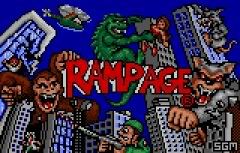
Just to compare things, here is the later version of Rampage that was eventually released on the Lynx. As you can see, it's more clearly patterned after the arcade game, expanded to include 4-player action. It's also a real step backward graphically.
I don't know if that affected the popularity or success of the game. It was a real turn-off for me; enough so that I never played it until the Lynx was gone and reincarnated as the Handy emulator. That was really too bad, because I missed out on a genuinely fun and solid game, and the Lynx circa 1991 was seriously running short on solid titles.
Still, I wanted the earlier Epyx Rampage that I was promised. I felt like I got screwed. At that time, 1990, going into 1991, the Lynx was already in decline and the writing was on the wall.
All the Atari Games arcade translations were superb, and brilliant achievements for a small handheld, but the second and third wave of Lynx games were lacking the depth of the original Epyx titles. They lacked the ambition, never really surpassing the visual standards set by Slime World, Gates of Zendocon, Gauntlet 3, Electrocop, Blue Lightning, Chip's Challenge.
The later titles were arcade games, meant for short sessions. A couple quarters here, a couple quarters there. That's great for a lot of reasons, and I can't imagine the Lynx without them, but the depth was lacking. It was also pretty easy to tell that Atari struggled with original games. The Atari Games roster was already coming to a close, and that pretty much meant the end of the road.
All of this is just a long-winded explanation for why I passed up Rampage back then. It really doesn't have much to do with the game itself. Heck, you can fire up Rampage on Handy and see for yourself - it's a pretty fun arcade romp. A little cartoony and a little slow, but good. I'd imagine that it truly shines in multiplayer, but, as you can guess, I've never found that out.
Epyx's Rampage Deluxe on Lynx
Thanks to The Atari Times, which provided this screenshot.
This shot came from the Atari Lynx article in EGM #4, which was the first article in any videogame magazine about the Epyx/Atari portable. VG&CE followed up around the same time with a cover story, and between these two I was firmly sold on Lynx.
This shot is from an early "lost" Epyx game, Rampage Deluxe. I've never seen anything beyond a couple screenshots - this one, and the title screen. I do remember being wowed by the detailed graphics. I'm still amazed. This looks far better than the Rampage that was eventually released on the Lynx in 1990.
Most likely, its loss stemmed from the collapse of Epyx around that time. For this, we can point to the Tramiel family, the Atari, Corp. owners who are so beloved by the hardcore gamers. Stories involve Epyx being denied crucial royalty payments, a stringent contract with Atari, and the Tramiels reputation for stabbing their collaborators in the back.
I'll leave you to decide the wisdom of their business decisions, and to seperate the history from the fiction. I honestly don't know, aside from various interviews that can be found on the internet.
As far as we're concerned, one of the great classic game developers went bankrupt and died long before its time. I wonder if anything from Rampage Deluxe was saved, scavenged by the former employees? The damned thing looked fantastic. Chalk it up to another "what-if" in the tragic life of Lynx.
Slime World on Genesis
A hallmark of a good game is when it reappears on another console. Usually when a minor console has a "hit," that game reappears on the bigger-selling systems. I guess that means Chip's Challenge and Todd's Adventures in Slime World were the Atari Lynx's biggest hits.
Slime World was ported to the Genesis, and was published by Rennovation, who were responsible for publishing a number of Telenet games like Valis 2 and Gaiares and Granada. I don't remember who was responsible for the Genesis Slime World, aside from Lx Rudis, who did all that techno-industrial sounding music for a number of Epyx and Atari Lynx games.
Anyway, Slime World wasn't successful on Genesis, and pretty much came and went without fanfare. The prozines were somewhat merciless, but it has to be said, this game was always a little out of left field. Remember, this was several years before Super Metroid, and ages before developers started pirating Nintendo's formula for advanture platformers.
The general consensus by gamers and press is that Genesis Slime World wasn't as good as the Lynx original. I think that's an easy first impression, especially when you notice how static and stationary the game worlds are. On Lynx, the environments twisted, turned, and gurgled with fantastic animation. This kind of sprite manipulation simply was not possible on other consoles, and probably could only be replicated with today's generation. Even then, I think pulling it off would require some skill from the programmers.
I can't say whether the atmosphere, and its claustrophobic tension, was a result of the Lynx's small screen, so that everything is in close-up. There is something tangible that's lost when ported to the Genesis. Perhaps it's the smaller sprites, or the fact that it's on a larger television. This version feels a little distant, detached.
However, when you look deeper (something Thich Nhat Hanh is always fond of saying), you realize that Genesis Slime World is very faithful. As translations go, it's as close to the original as was possible, without any need to redraw the graphics or change the gameplay to mimic every other Genesis title. Aside from the animation, the graphics look pretty good. It all seems scrunched down a little, but this is for the benefit of the 2-player split-screen action. Nowhere near the Lynx and its 8-player games, but, honestly, how many of you have ever played a multiplayer Lynx game? You might as well debate the afterlife.
What impresses me the most is that the control scheme is untouched. I'm sure it would have been easier to remap the control scheme, and maybe speed up Todd's jumping and firing. No doubt the slower, more suspenseful tempo turned off writers from the prozines; perhaps this is why, aside from good 'ol VG&CE, it was completely ignored. I thought EGM had an Atari employee writing reviews for them (as "Sushi-x"). What's their deal, anyway?
Time, however, has blessed Slime World, and the Genesis version now fills a void for a genre that practically didn't exist. Super Metroid and Castlevania changed all that, and now you'll go scrounging through your Genesis library for something to compare to.
Atari Really Sucked At Sports
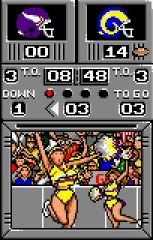
Seriously, how can a game with hot cheerleaders be so terrible? You call that job satisfaction? 'Cuz I don't.
This is pretty much the only good screenshot from NFL Football on the Lynx. I guess this would be okay, if the only football game you ever played was the original 2600 Football cartridge from 1978. No, scratch that. That game was better. You could at least figure out what the hell you were doing.
For every good game on the Lynx, there were three games that were absolute shit. Here's one of 'em.
Games That Need to Be Revived: Blue Lightning
Somebody solve this mystery for me: why hasn't there been one good airplane shooter since Epyx's Blue Lightning? I remember being completely wowed by this game back in 1989. It really was the coolest thing ever, and probably the most popular Lynx game wherever I brought it around. Don't you think we're long overdue for another great game like this? I want another canyon run, dagnabbit!
I don't think today's publishers are aware of how much fun simple, old-style arcade games can be. Everything doesn't have to tie in with some cheesy overbudgeted b-movie, or be endlessly packed with extras. Not every game needs to be played for 50 hours straight. Sometimes, a game that you can jam with for ten minutes can be fun, too. And there are a lot of classic games that would be perfect for Nintendo DS.
Something like, oh, I dunno...Blue Lightning.
Subscribe to:
Posts (Atom)